Write the assignment
Choose one reader and one question. For a balcony-gardening article, specify first-time gardeners, container selection, an approachable tone, and any source notes you already have.
Article drafting
Aiwriter is an informational guide, not a generator. Writing linked from here is for keyword-led SEO articles, not an open-ended prompt. SupaTraffic requires sign-in, a site or project, a selected keyword and a paid article plan to write. No example or brief on this page is transferred.
A useful article begins with a clear reader, angle, and source material. Start with a focused request, then treat the draft as a working document—not a verified final piece.
Illustrative brief · not submitted
Draft an 800-word article for first-time balcony gardeners on choosing containers; include an outline and flag claims that need sources.
This partner creates keyword-led SEO articles, not a generic free-form draft. This page has no working writing form and does not transfer the example.

Before drafting, gather what the article must say and what it must not assume. The closer the brief is to an editorial assignment, the easier the result is to review.
Consider study-focused writing needs, including outlining and checking work against assignment rules.
Explore research-writing considerations where evidence and citation accuracy matter.
Look at planning longer narratives whose structure extends beyond a single article.
Set these boundaries in the brief rather than hoping a draft will resolve them on its own.
A fluent paragraph is not proof that a statistic, date, quotation, or attribution is correct.
WorkaroundProvide trusted source material and verify each factual claim against it before publication.
A draft cannot supply an interview you have not conducted or an experience you have not documented.
WorkaroundAdd original reporting, observations, or attributed expert input during editing.
A broad topic can produce a generic overview rather than an answer tailored to a particular reader.
WorkaroundName the reader, the specific question, and what competing articles leave unanswered.
Here is a practical route from an empty page to a draft you can responsibly edit.
Choose one reader and one question. For a balcony-gardening article, specify first-time gardeners, container selection, an approachable tone, and any source notes you already have.
Ask for a short introduction, sections that answer the reader's question in order, and a conclusion with a useful next step. Request visible placeholders wherever evidence is missing.
Check the outline first, then verify claims, remove repetition, add original detail, and read the piece aloud. Revise the opening only after the body delivers on its promise.
Choose the starting approach that matches the material you actually have. The illustration contrasts a loose topic with a more directed editorial brief.

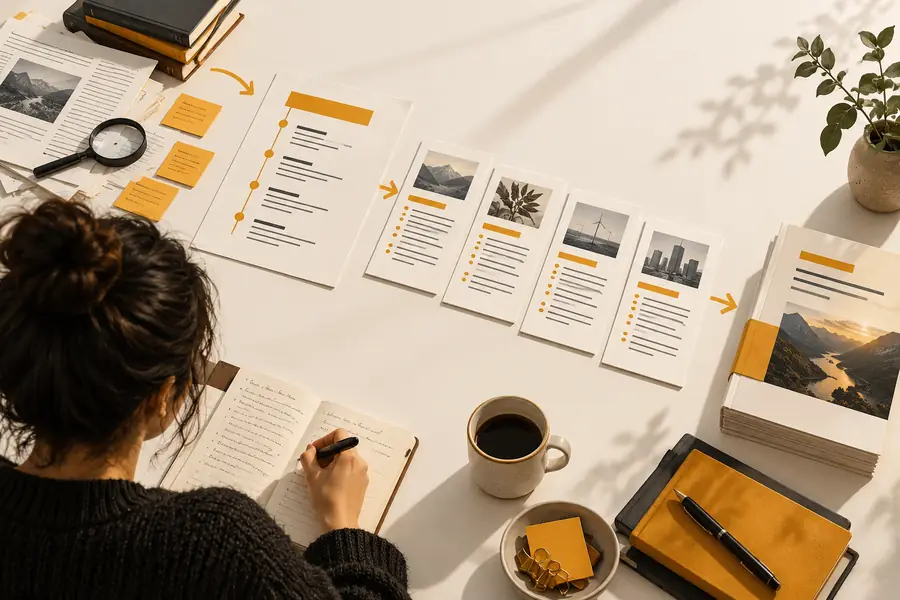
Starting options: topic only—useful for exploring possible angles; outline supplied—useful when structure is settled; source notes supplied—best when factual boundaries are important. These visuals illustrate the distinction, not a verified output comparison.
The common failure is asking one draft to do a different job. Match the assignment to its actual format before refining the prose.
A timely post becomes a broad, undated explainer because the request omits the publication's point of view.
Define the audience and timely angle first; an ai blog writer is a more relevant starting point for recurring blog posts.
ai blog writerAn article-style draft buries the product's specifications and leaves shoppers without a clear description.
Use a product description generator when the job is to explain one item accurately and concisely.
product description generatorA full article draft is squeezed into search-preview copy and loses its main point.
Use a meta description generator for a short page summary, then check that it matches the published article.
meta description generatorBring your reader, angle, and any reliable notes. Draft the article, then take responsibility for its facts, voice, and final editorial decisions.
Name the intended reader, the question the article should answer, its angle, and the approximate scope. Add an outline or trustworthy notes if you have them, and ask the draft to flag facts that require checking.
It should be reviewed first. Check factual claims and attributions, remove unsupported assertions, and make sure the piece reflects your own editorial judgment and publication standards.
Either can inform a reader, and the labels often overlap. An article brief may put more emphasis on a defined question, evidence, and a complete explanation, while a blog post may follow a publication's recurring voice or timely angle.
You can use a draft to organize material you provide, but do not assume its citations or quotations are real. Open the original sources, confirm what they support, and write accurate attributions before the article goes live.